
Product and marketing images fail in different ways. A product can look attractive while its shape drifts, a campaign image can leave no room for a headline, or a poster can render clean type while missing the brand language.
Whisk AI, Midjourney, and Ideogram approach that work from different starting points. Whisk AI separates Subject, Scene, and Style references. Midjourney exposes several reference systems for aesthetic control. Ideogram puts more attention on type, layout, and design-oriented image making.
This is a workflow comparison, not a pixel benchmark. Use the same product brief and review criteria, then choose the system that reduces the hardest part of the job.
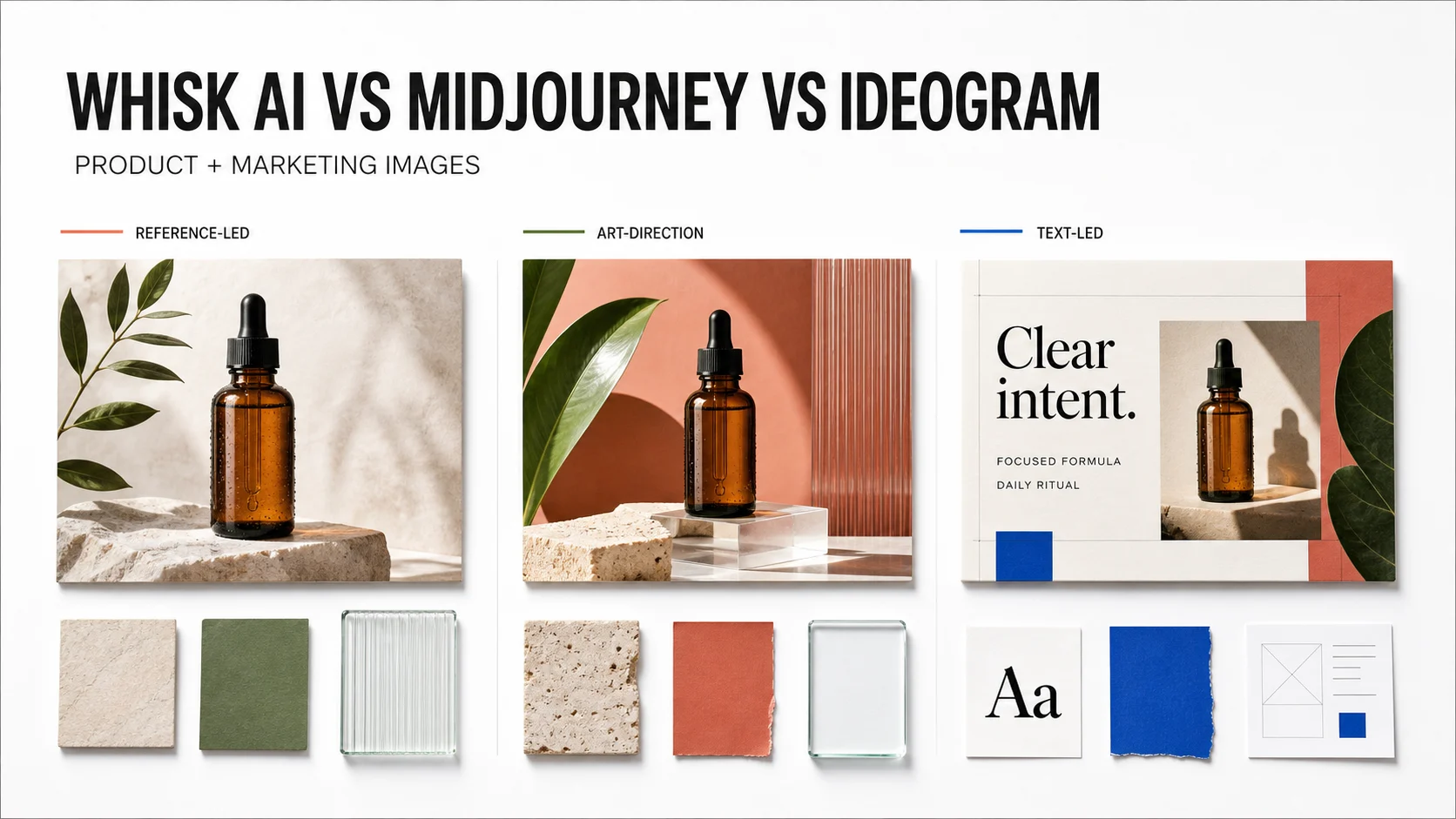
The short answer
| Image job | Best starting point | Why | Main check before approval |
|---|---|---|---|
| Put a known product into several campaign settings | Whisk AI | Subject, Scene, and Style stay separate while you explore routes | Product silhouette, materials, and packaging details |
| Explore a distinctive visual world or editorial treatment | Midjourney | Image Prompts, Style References, and Omni Reference give you layered aesthetic control | Whether the chosen style overwhelms the product |
| Build a poster, social graphic, or ad concept with visible copy | Ideogram | Ideogram 4.0 is positioned for clear type, prompt fidelity, editing, and design-focused output | Exact copy, spacing, hierarchy, and brand review |
For a literal catalog packshot, none of these should replace approved product photography. AI is most useful for choosing a visual direction before a shoot, retouching pass, or full channel set.
What this comparison measures
The systems overlap, but their control surfaces are not interchangeable. Compare them on four questions:
- What do you provide first? References, a prompt, or a design brief with copy and layout requirements?
- What stays stable during revision? Product identity, mood, composition, or copy?
- Where does the output need help? Reference fidelity, visual direction, or text?
- How expensive is the next change? A good first image is not always cheap to revise.
The shared task is product-led campaign exploration, so each system gets a fair job without pretending that one interface solves every type of image making.
Whisk AI: reference-led composition
Whisk AI starts with the visual ingredients of the image. In the Whisk mode of the Whisk AI workspace, you can place up to one image in each optional Subject, Scene, and Style slot, then add a text prompt. That division makes the creative brief easy to inspect.
- Subject carries the product or person that must remain recognizable.
- Scene carries the setting, props, scale, and environmental context.
- Style carries the palette, texture, lighting, or medium.
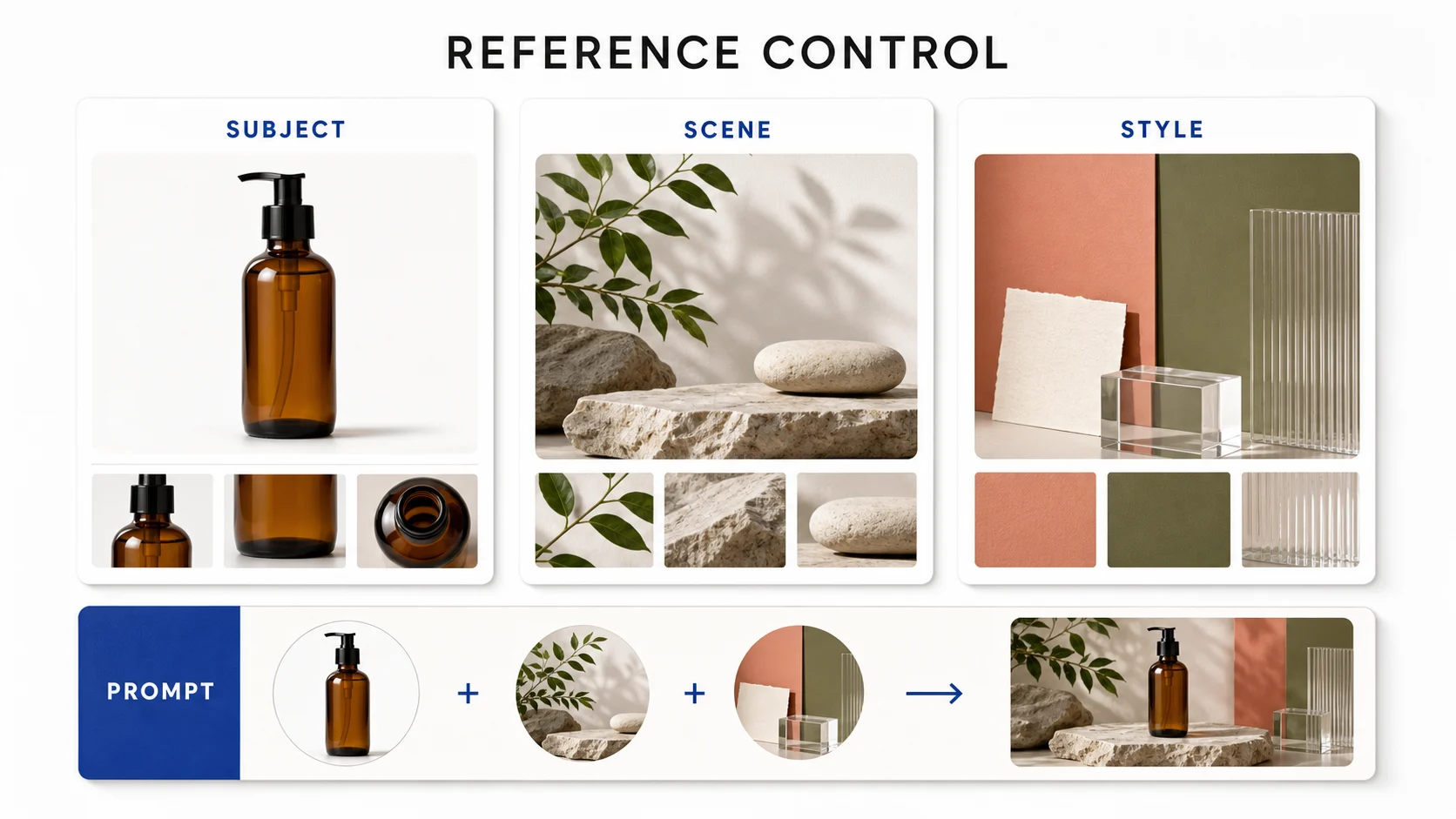
This fits product marketing because the team can hold the product reference steady while testing studio, lifestyle, and seasonal routes. The prompt adds decisions references do not show clearly, such as negative space, camera distance, and details to avoid.
The main limitation is clear: a remix interprets references rather than producing a pixel-locked composite. Packaging features, logos, patterns, and color can change, so treat the output as a creative draft rather than product truth.
| Whisk AI strength | Where it saves time | What still needs review |
|---|---|---|
| Separate visual roles | Change the Scene or Style without discarding the Subject | Product geometry and small packaging details |
| Image-first brief | Start from a real product photo instead of describing every surface | Whether the references pull in conflicting directions |
| Prompt plus references | Add layout and audience decisions to the visual inputs | Copy, claims, labels, and final brand approval |
| Credit estimate before generation | Decide whether another variation is worth generating | Total revision cost across a campaign set |
For one product and several directions, Whisk AI is the cleanest first test. The existing guide to AI product photography shows the same separation in a detailed exercise.
Midjourney: expressive art direction
Midjourney gives references different jobs through separate image systems and parameters. An Image Prompt can influence content, composition, and colors. A Style Reference carries visual mood, such as color, medium, texture, or lighting, without asking the system to copy the source objects. An Omni Reference can place a person or object from one image into a new creation.
That range makes Midjourney useful when the marketing problem is visual distinction. Establish an editorial world, explore unusual material treatments, and move away from stock-photo language. Style weight and stylize settings shift the result between a literal brief and a more interpretive direction.
Midjourney asks for more judgment about reference type. Omni Reference is limited to one image, runs with V7, costs more GPU time than a regular V7 image, and does not work with every editing feature. Logos and small physical marks may not match the source, which matters when a known product sits inside an expressive scene.
Midjourney is a good choice when visual interpretation belongs in the direction. It is less comfortable when the first review question is, “Does this bottle still have the exact cap, label position, and silhouette?”
Ideogram: campaign graphics with type
Ideogram fits a different part of the marketing pipeline. Its current documentation positions Ideogram 4.0 around prompt fidelity, clear type, editing, native transparency, style control, and design-quality output. It also supports remixing, style references, multiple outputs, and aspect-ratio choices, though access varies by model, plan, and workflow.
That makes Ideogram a strong candidate for campaign concepts with visible language: a launch poster, social announcement, thumbnail, event graphic, or product image with a short headline. It brings generation closer to layout exploration.
The tradeoff is reference structure. Ideogram can remix and edit, but it does not present Whisk AI's three-role model. If product, location, and visual treatment all matter at once, use an explicit prompt and manual checks. Credit use changes with output count, model, and render speed.
Choose Ideogram when copy and composition are part of the brief from the first round. Keep final text, legal lines, and brand spacing in an approval pass rather than treating a generated draft as finished artwork.
Choose by marketing job
Product in a new environment
Start with Whisk AI. Use a clear Subject reference, a Scene that answers the campaign question, and a Style reference only when it adds a distinct decision. If the product drifts, simplify the other inputs before adding prompt detail.
A recognizable art direction
Start with Midjourney. Use a Style Reference for the visual world, an Image Prompt for composition or color, and Omni Reference only when preserving an object or character is worth its constraints. Keep the text prompt focused on the frame.
A graphic that needs readable copy
Start with Ideogram. Define the exact words, hierarchy, orientation, and channel. Generate a few layouts, then inspect the copy at customer viewing size. Use a design tool for final typography when legal or high-value brand language is involved.
An exact ecommerce record
Start with the approved product photo. These AI systems can help you explore a backdrop or campaign route, but a generated image should not become the authority for dimensions, ingredients, regulatory claims, or mandatory packaging text.
Run the same brief through all three
Use one unbranded amber bottle, a landscape ratio, and one campaign idea: “A calm morning skincare launch with room for a headline.” Run five controlled passes:
- Keep the product reference, audience, crop, and review criteria fixed.
- In Whisk AI, keep Subject fixed and change only Scene and Style between routes.
- In Midjourney, test an Image Prompt, a Style Reference, and a product-focused Omni Reference as separate experiments.
- In Ideogram, use the same product description, headline length, aspect ratio, and output count.
- Save the prompts, references, outputs, and credit or GPU usage before comparing results.
Give each system the same attempts and chance to revise its weakest decision before comparing polished finals.
Review the output, not the vibe
Score each candidate on the job it needs to perform. A beautiful image with the wrong product shape should lose to a quieter image that preserves buyer-relevant information.
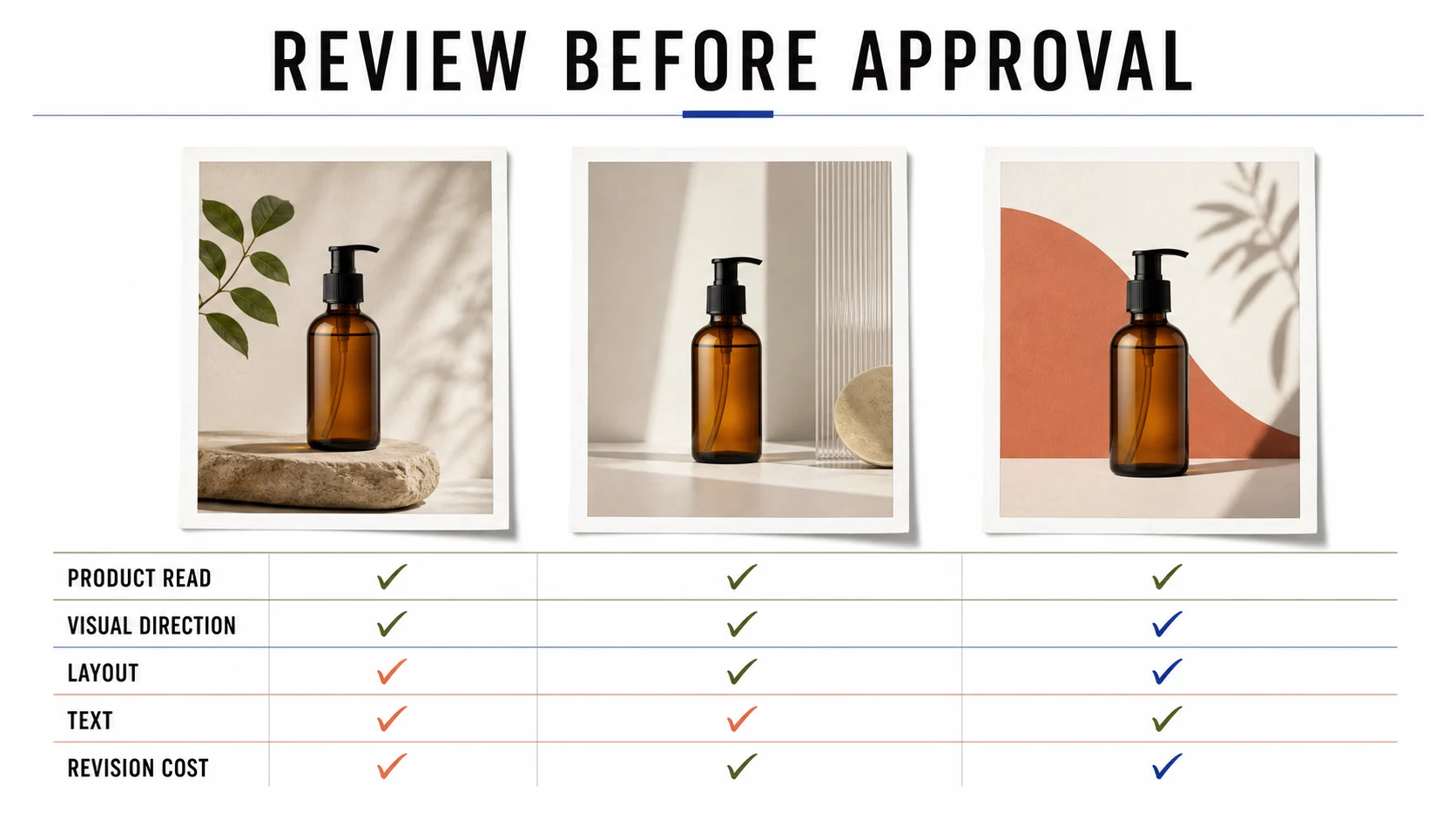
| Review dimension | Pass condition | Regenerate when |
|---|---|---|
| Product read | Shape, material, and key features remain recognizable at thumbnail size | The bottle, cap, handle, or pack proportions drift |
| Visual direction | The image has a specific mood that supports the campaign | The result could belong to any brand |
| Layout | The crop leaves a deliberate place for copy or a clear focal point | Props compete with the product or the frame feels trapped |
| Text | The words, spelling, and hierarchy survive a close inspection | The image contains invented or distorted copy |
| Revision cost | The next change has a clear target and limited blast radius | You must replace every reference or rewrite the whole brief |
Record the next change. Whisk AI may make a Scene change easy, Midjourney a rewarding but less predictable Style change, and Ideogram a layout revision worth another generation.
Bottom line
Choose Whisk AI for a known product and a reference-led set of campaign directions. Choose Midjourney for a strong visual world where interpretation is part of the art direction. Choose Ideogram for image concepts that need visible copy, layout awareness, or a design-oriented starting point.
The practical answer can be a sequence rather than a winner: use Whisk AI to establish a product and scene direction, Midjourney to test a distinctive treatment, or Ideogram to explore a copy-led frame. Move the winning route into an approved production process, and keep generated images on the concept side until product and brand review is complete.
Frequently asked questions
Which is best for product marketing images?
Whisk AI is the best first test when you have a real product reference and need several settings. Midjourney suits expressive art direction. Ideogram suits campaign images where the copy and layout carry much of the message.
Can these tools create a final product packshot?
They can create useful concepts, but a final packshot needs catalog-level product, color, copy, and compliance control. Use approved source photography when those details are non-negotiable.
Should I compare the image quality or the workflow?
Compare both, but start with the workflow. Use the same brief, reference set, output ratio, number of attempts, and review scorecard. Then measure which system gives your team a usable direction with fewer expensive revisions.